
Dinosaur National Monument Guided Rafting Trips
Where the Earth bends and breaks as archaic mountains and even older rivers collide, Dinosaur National Monument is considered by many the heart of Mother Nature herself. It is a prehistoric drama at its finest, not to mention the countless Jurassic era fossils that give the park its namesake. To truly experience Dinosaur in all its staggering grandeur, one must float within its remarkable river canyons

Green River
A magnificent towering canyon marks the start of the trip at the “Gates of Lodore” and follows one of the most beautiful stretches of river anywhere. Camp on big sandy beaches, revel at red quartzite cliffs, and enjoy the thrills of 30+ class II & III rapids on a 3 or 4 day adventure.
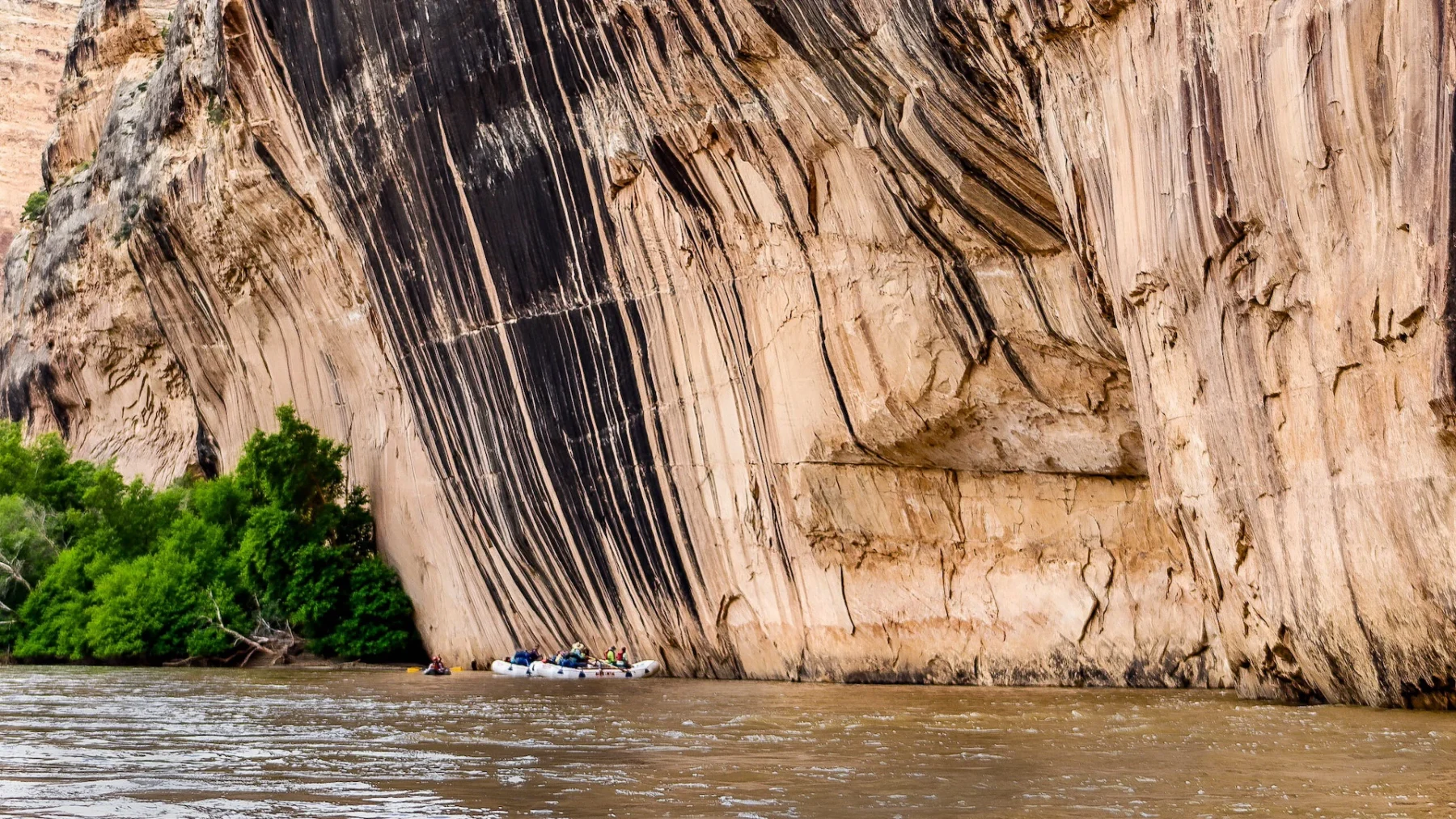
Dinosaur National Monument
- Season: May – July
- Adventure Level: Intermediate – High
About Dinosaur National Monument
What river runs through Dinosaur National Monument?
Dinosaur National Monument is home to the Yampa and Green River confluence.
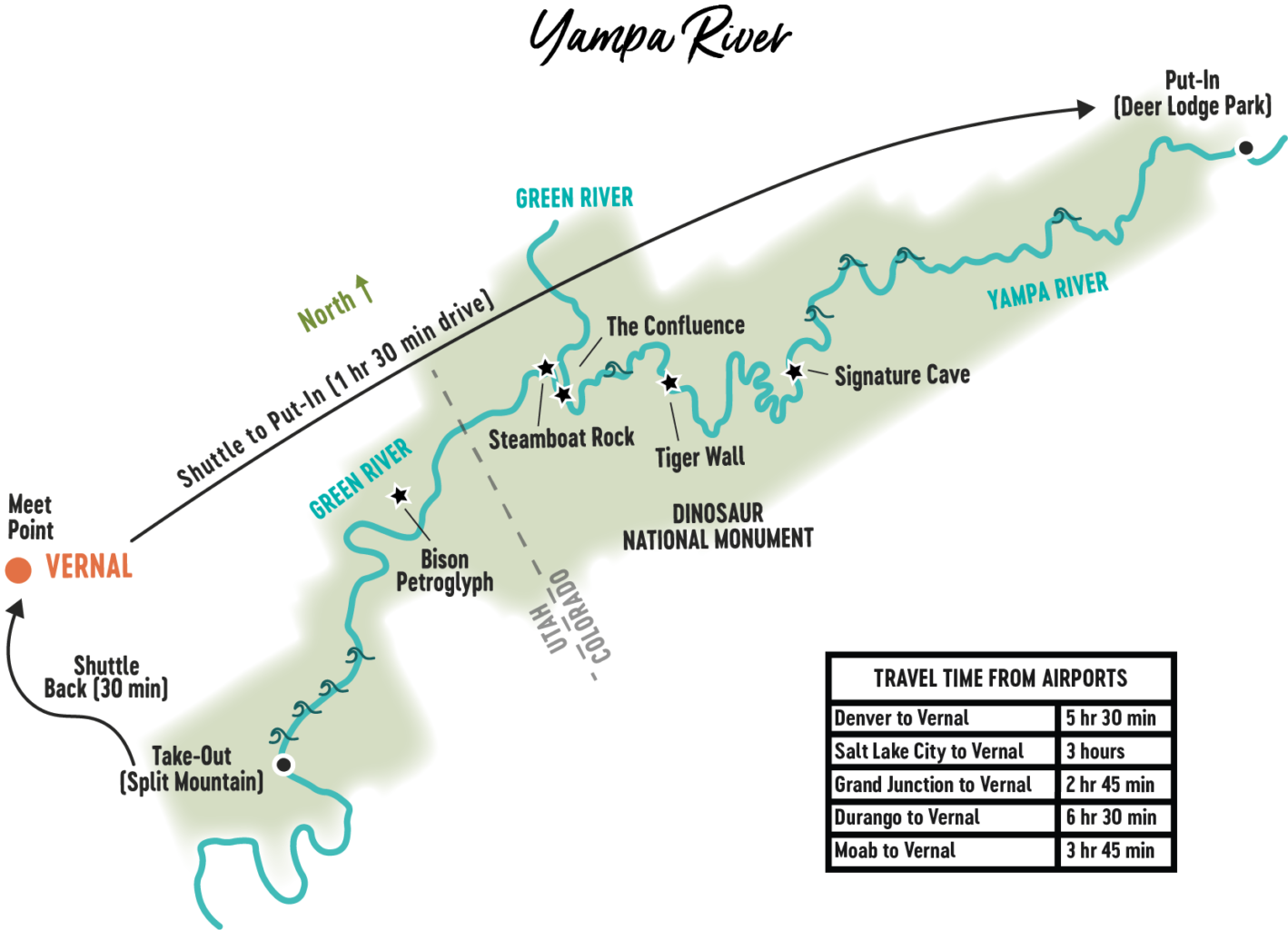
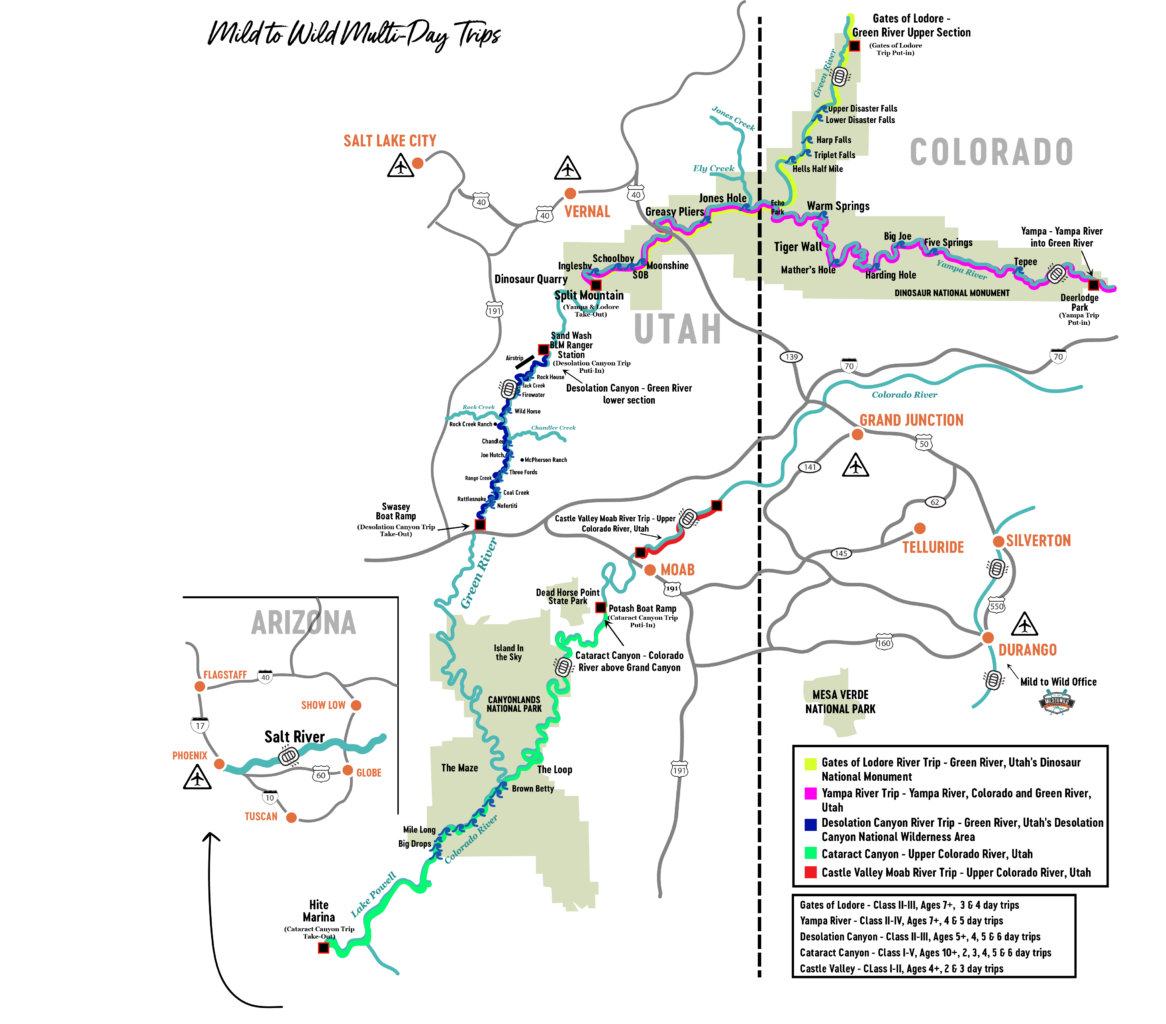
The Yampa River meanders through its own canyon for 46 miles until reaching the Green River in Echo Park. The trip begins at Deerlodge Park Campground and ends at the Split Mountain Campground for a total of 72 river miles.
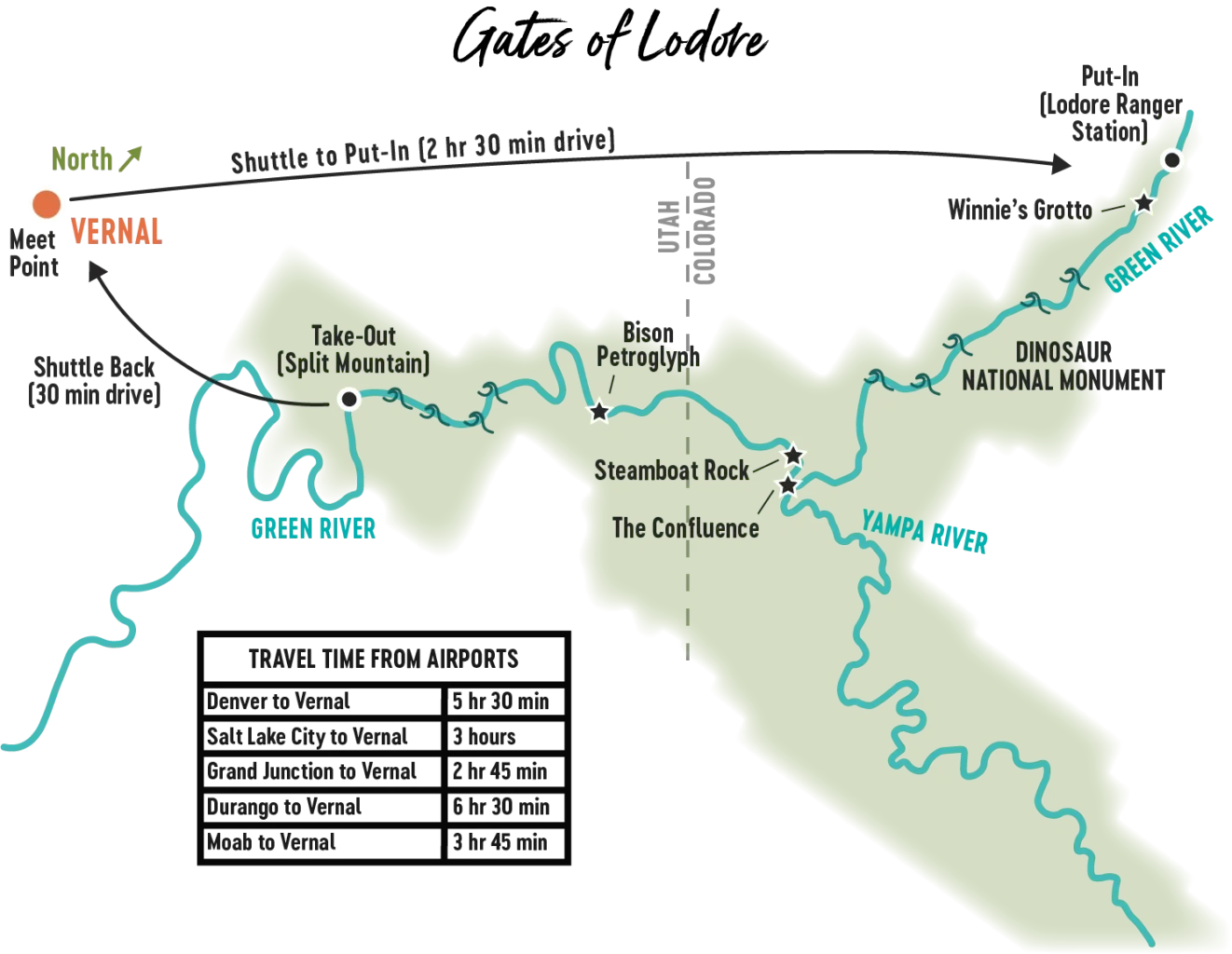
The Green River meanders through Lodore Canyon for 18.5 miles until meeting the Yampa in Echo Park. The trip begins at the Lodore ranger station and ends at the Split Mountain Campground for a total of 45 river miles.
What class rapids are in Dinosaur National Monument?
Boaters on Yampa River trips will experience class III-IV rapids, while those on Gates of Lodore trips will experience class III+ rapids.
How much time do you need at Dinosaur National Monument?
Folks exploring Dinosaur National Monument via raft should plan for 3 days minimum in the park.
What kind of wildlife is in Dinosaur National Monument?
The most common wildlife sightings in Dinosaur National Monument are usually: Bald Eagle, Great Blue Heron, Big Horned Sheep, Deer, Otter, Beaver, Cottontail Rabbits and Prairie Dogs.
If you’re lucky, you may be able to see more elusive animals, such as: Fox, Pronghorn, Elk, Bobcat, Black Bear and Mountain Lion.
Are there dinosaur footprints in Dinosaur National Monument?
There is a massive quarry where you can see a multitude of preserved fossils and dinosaur footprints. As for dinosaur footprints to be found throughout the park, there are no established sites that have been excavated. You can certainly find fossils throughout the river canyon, while most not from the Jurassic era, if you know how to look for them.
Can you swim in the Green River at Dinosaur National Monument?
It is not recommended to swim in the river during spring months, as the water is cold and the current is swift. Later in the season from July to September swimming in calm areas, such as Echo Park, may be okay.
What city is closest to the Dinosaur National Monument?
The surrounding towns around Dinosaur National Monument include: Vernal and Jensen in Utah, and Dinosaur, Colorado. Jensen and Dinosaur are smaller towns, while Vernal is larger and hosts a regional airport.
Why go to Dinosaur National Monument?
Dinosaur National Monument is one of the most unique wilderness areas in the western United States, holding a wealth of historical, scientific, and ecological significance.
The canyons that make up Dinosaur National Monument were saved from dams that were set to put them underwater in the 1950s, and played a huge role in starting the Environmental Movement.
As for the park’s namesake, over 1,500 perfectly preserved dinosaur fossils were uncovered in the early 1900s, and is considered one of the “most productive Jurassic era quarries ever found” per NPS.
Dinosaur National Monument’s rarities apart from its fossils are plentiful, including the geologic masterpiece of Steamboat Rock and the Mitten Park Fault, along with the numerous Fremont pictographs and petroglyphs found throughout the canyons.
Photos
History & Videos

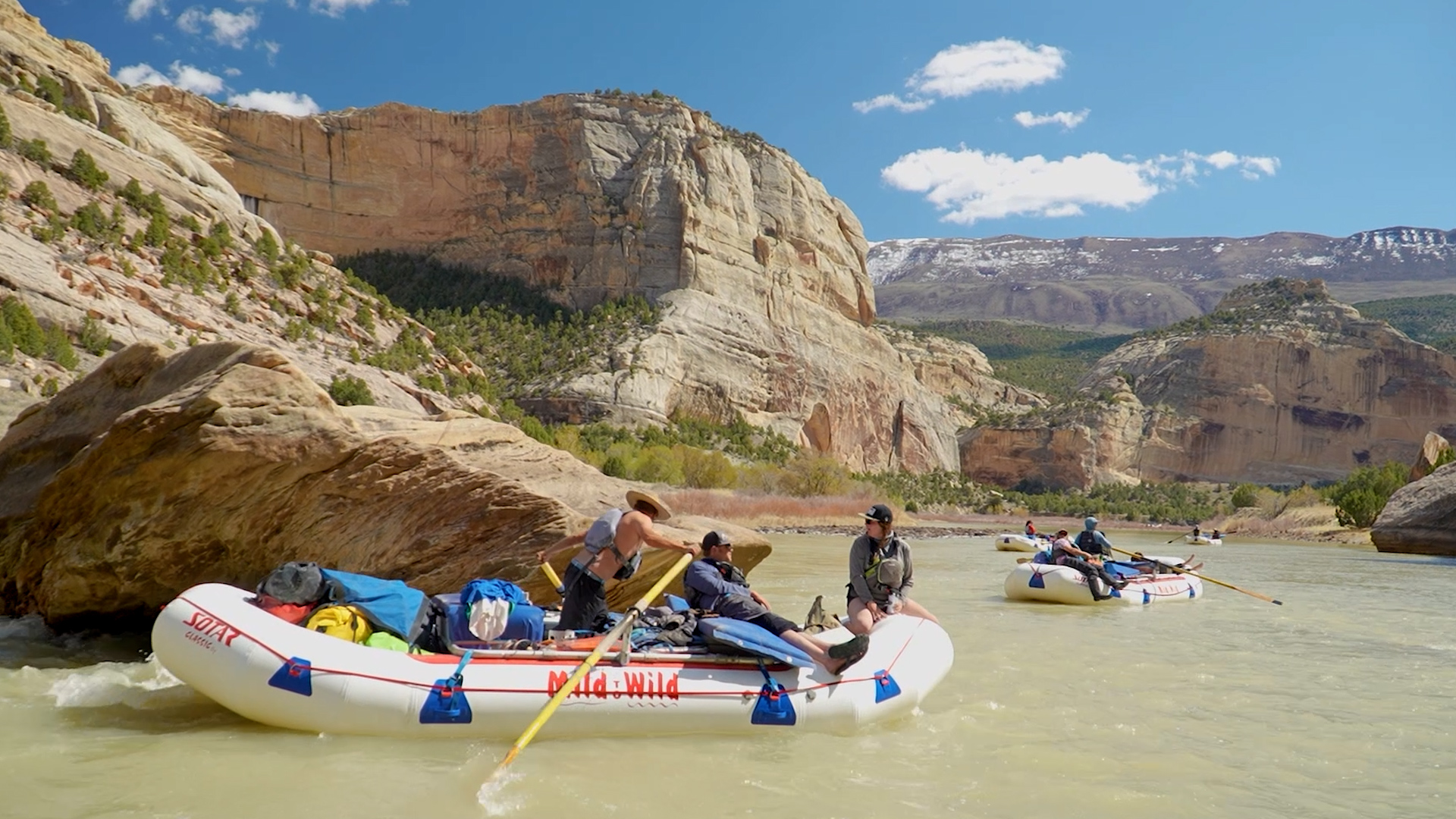
Maps
Yampa River
Gates of Lodore
Map of Dinosaur National Monument within the Colorado Plateau River System
Dinosaur National Monument (Green & Yampa Rivers) FAQs
When is the best time to raft in Dinosaur National Monument?
The “best” time depends on which river you choose! For the Yampa River, the peak season is May and June, as this is one of the last free-flowing rivers in the Western United States and relies on the spring snowmelt for its thrilling Class III-IV rapids. For the Green River (Gates of Lodore), the season is longer, running from May through September, with consistent, dam controlled flows that offer fantastic Class III splashes all summer long.
When can I raft in Dinosaur National Monument?
Expeditions typically run from May through September. Due to the high demand and the strict National Park Service permit system, these trips—ranging from 3 to 5 days—often book up many months in advance. We recommend booking as early as possible to secure your launch date for these premier wilderness journeys.
What is the minimum age to raft the Green and Yampa Rivers?
The standard recommended minimum age is 7 years old. However, during the high-water on the Yampa (typically in early June), the minimum age may increase to 12 or 14 years old.
What should I wear and bring on a Dinosaur National Monumnent multi-day rafting trip?
Since these are immersive wilderness trips, you’ll need gear for the raft and the campsites! We provide all rafting equipment, group camping equipment, and delicious riverside meals. You are responsible for your personal items:
- On the River: Quick drying synthetic layers, a sun protective hat, and secure river sandals with a heel strap (no flip-flops or crocs). In the early season (May/June), a wetsuit is highly recommended on the Yampa River.
- At Camp: Comfortable camp shoes, a headlamp, and warm clothing layers for cool desert nights. You can bring your own tent, sleeping pad and sleeping bag, or rent from us.
For a comprehensive packing list visit our multi day rafting trip planning page.
Is white water rafting in Dinosaur National Monument safe?
White water rafting is an inherently dangerous activity with risks that cannot be entirely eliminated. As a result, we require all guests to sign a liability waiver and assumption of risk before departing. However, your experience is our number one priority. To minimize risk in this rugged environment, our guide training exceeds state requirements and trip leaders average over 5,000 river miles of experience. Our guides are certified in CPR and First Aid, with many holding advanced Wilderness First Responder (WFR) or Wilderness Advanced First Aid (WAFA) certifications. We utilize quality and well maintained equipment, including custom designed rafts, U.S. Coast Guard approved Type V personal flotation devices, and helmets. Expeditions are equipped with satellite communication, comprehensive first aid kits, and an AED to ensure we are prepared for the remote nature of Dinosaur National Monument.
Reviews from our Guests
Posted on Google Cynthia Meyer20 days ago
Trustindex verifies that the original source of the review is Google.
Just returned from our three-night Gates of Lodore rafting adventure. My husband and I were on our second Lodore trip with Mild to Wild, and we were happy to be able to share this current trip with our daughter and son-in-law. The expansive wilderness canyon and river scenery just nourishes the soul. Our amazing guides, Jackson and Jordan, generously shared with us their authentic joy-of-living, their camaraderie, their competence, their delicious cooking, and their love and respect for the river and the land. We had so much fun on the rafts and the duckies, and learned so much about rafting, geology, wildlife, and history. We were so excited to have a great sighting of a moose in Island Park!! At the same time I had a lot of confidence that Jackson and Jordan were keeping us all safe. We are already planning our next trip. Thanks so much, Mild to Wild.Posted on GoogleCaroline Feller54 days agoWhat a great trip. Mild 2 Wild thought of everything. The Gates of Lodore trip was fun and beautiful. Our guides were amazing. Jordan, Ben F,, Brandon and Konrad. Thank you!Posted on GoogleScott O'Neill54 days agoJust finished a four day float through the Gates of Lodore/Dinosaur National Monument. We had a great time and were well taken care of by our guides Jordan, Ben, Brandon and Conrad. The trip was amazing, the food incredible and our guides were amazing. They rowed all day, prepared our lunches and dinners and had incredible knowledge of Lodore Canyon/Dinosaure National Monument. If you are thinking about taking this trip, do it and I highly recommend Mild To Wild!Posted on GoogleJeni Barovian59 days agoRepeat multi-day rafting guest with Mild 2 Wild, and I fell in love all over again! This time, I enjoyed a four-day Gates of Lodore trip with my daughter. The guides really do go above and beyond -- Ryan and the entire crew were amazing, and it was especially awesome to see Devon again. I'll be back (again)!Posted on GoogleLinda Relson80 days agoWe spent 4 days on the water with Jordan and her team of guides. They were the best guides we could have asked for. Our friends had a wedding ceremony at the first campsite, and M2W helped make it so special. The trip was a wonderful escape from the everyday - no cell service on the Green River / DInosaur National Monument. Can't wait to do it again in future years. Hi Kelly!Posted on GoogleErin Mullen84 days agoOur four-day Gates of Lodore trip was amazing. Our guides, Ryan, Brandon, Shawna, Peyton, and Devon worked so hard, and really, could not have been better. The food was always good, safety was taken seriously, and fun was paramount. Everyone was cheerful, organized, and helpful. I would love to go on another trip with this group!Posted on GoogleElizabeth Upton97 days agoOur tour guide, Tierney, loves the land around Moab and took us up a neat trail to show us amazing rock formations. At one point, we got out of the Jeep and walked up little canyon to see a huge rock that had organic material petrified from the time of the dinosaurs. Everyone from my parents to my teenage children loved the tour.Posted on GoogleBrooke Edwards97 days agoOur family of five, with kids ranging in age from 12 to 14, recently had the pleasure of experiencing the Gates of Lodore 3-day, 2-night whitewater rafting trip with Mild to Wild. It was truly an unforgettable adventure. The guides were all fun, professional, and incredibly knowledgeable. We spent most of our time on the raft with Pascal, who was personable, engaging, and eager to share insights about the changing landscape, unique rock formations, and wildlife we encountered along the river. One of the highlights of the trip was the variety of rafting options available. Larger rafts allowed you to sit back and enjoy the ride, while smaller rafts offered a more adventurous experience with active paddling through the rapids. For those seeking the most hands-on excitement, the “Duckies”—two-person inflatable kayaks—provided an exhilarating opportunity to navigate the rapids yourself. The campsites were clean and comfortable, and the meals were outstanding. Mild to Wild also did an excellent job accommodating food allergies, ensuring everyone in our family could enjoy the dining experience without worry. I highly recommend Mild to Wild to anyone looking for an incredible whitewater rafting adventure. It was an experience our family will remember for years to come.Posted on GoogleChristine Irsik98 days agoA huge thank you to the incredible crew at Mild to Wild for making my Gates of Lodore three-day rafting adventure such a memorable experience. Ryan, Ben, Pascal, Abby, Devon, and Ziggy worked tirelessly behind the scenes to ensure everything ran smoothly from start to finish. From navigating the river and setting up camp to preparing meals, cleaning up, and taking care of all the countless details that guests often don’t even see, they made the entire trip feel effortless. Their professionalism, hard work, knowledge, and positive attitudes were evident every day. It’s easy to enjoy an adventure like this when you have a team that is so dedicated to creating a safe, fun, and unforgettable experience. And Abby, those steaks were outstanding! Thank you, Mild to Wild, and thank you to an exceptional crew. I truly appreciate everything you did for me this weekend.Posted on GoogleEmily Tichonuk102 days agoWe had the best 4-day trip through the Gates of Lodore with Jordan (hi Kelly!) and crew and everyone was absolutely incredible. Our friends got married on the trip and every single guide went absolutely above and beyond to make sure things were perfect for them. The rafting was a blast, food was incredible, and we had so much fun spending time with the guides. This was a special occasion but I’d love to come back for any trip in the future! Special thanks to Josie for princess paddling me across so much still water.
What are you waiting for? Call today (800) 567-6745 OR (970) 247-4789