
Green River White Water Rafting Trips
From snowy Wyoming peaks to Utah’s slick rock canyons, the Green River takes one of the most diverse journeys out of any tributary in the United States. Some of the best sections to explore the Green River include the lush chasms of Gates of Lodore in Dinosaur National Monument, and expansive wilderness of Desolation Canyon.
Green River
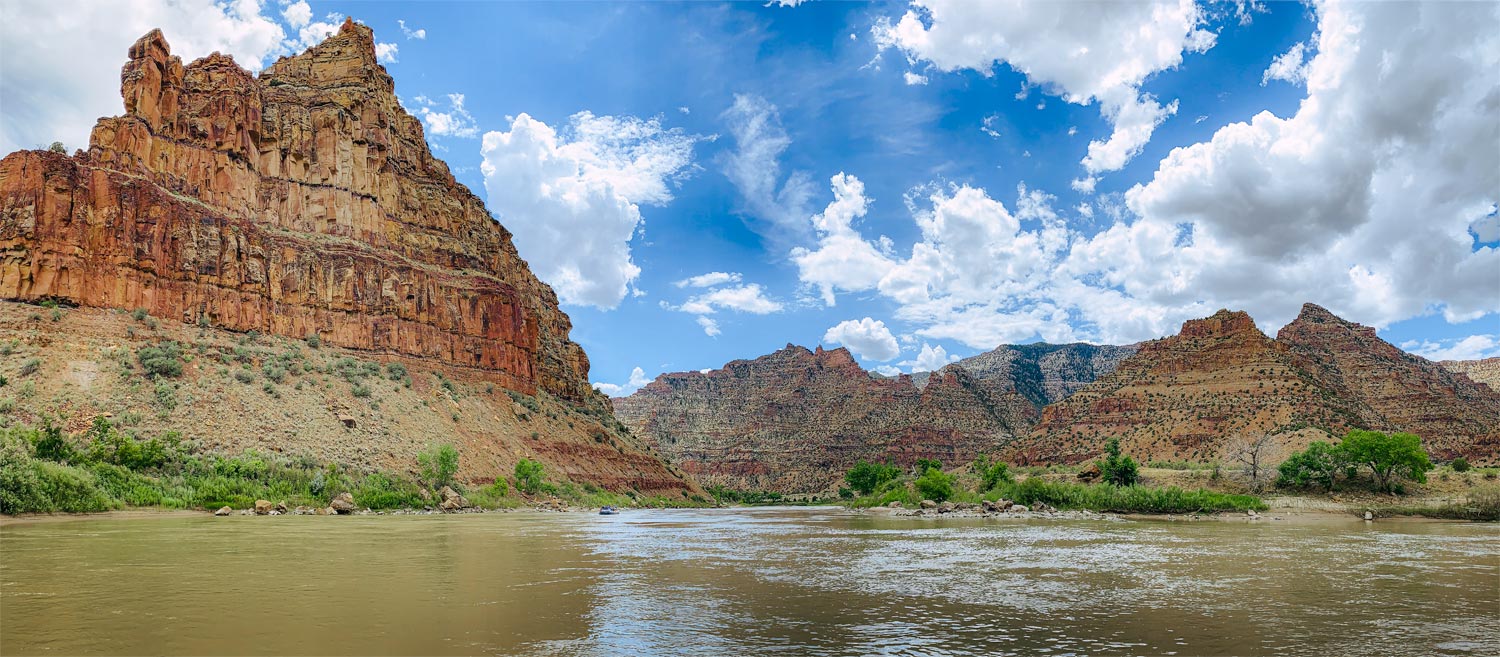
Located deep within the Tavaputs Plateau, Desolation Canyon is one of the most remote wilderness areas in Utah. Steep canyon walls with towering spires and abundant arches.

Green River
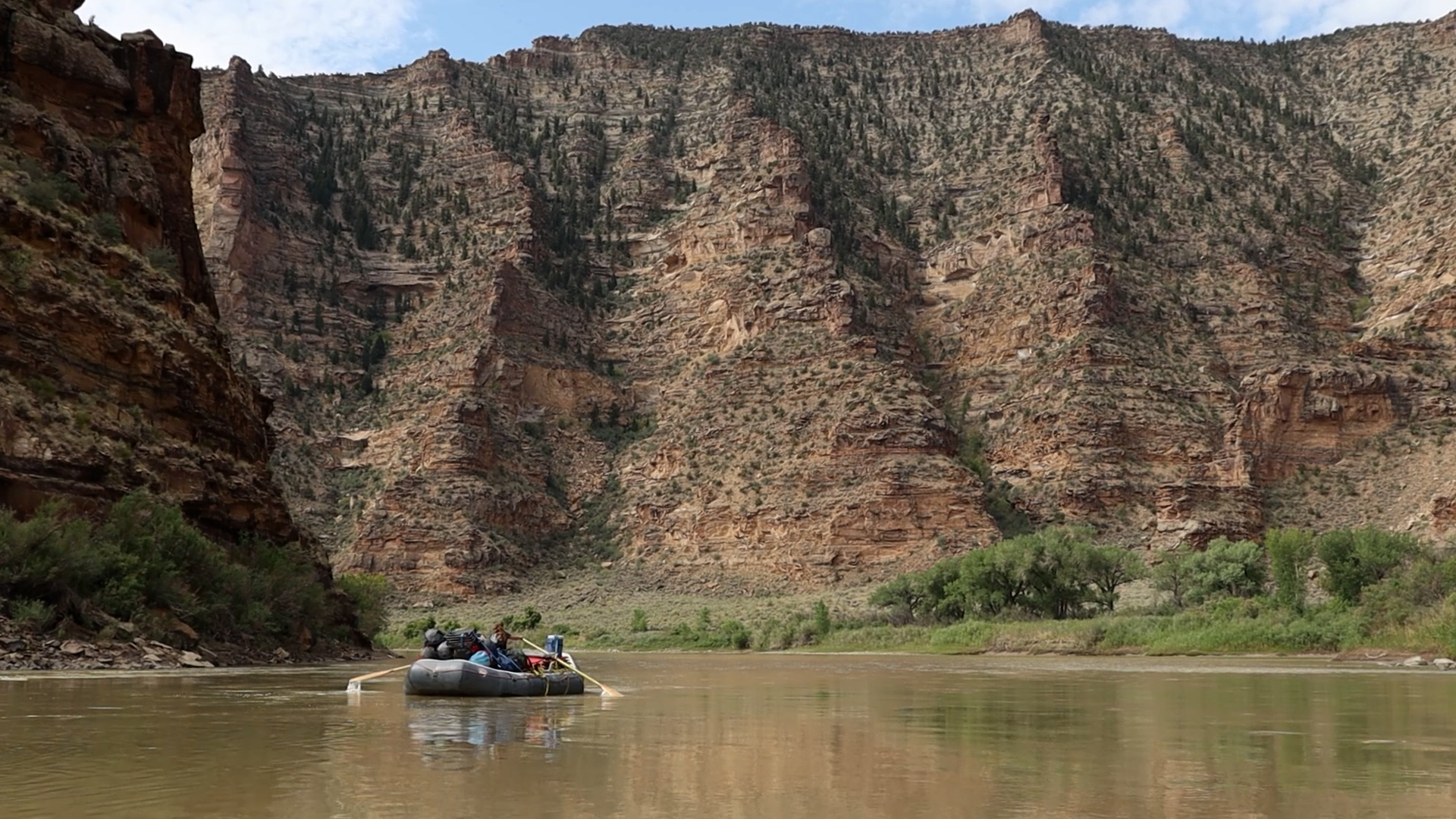
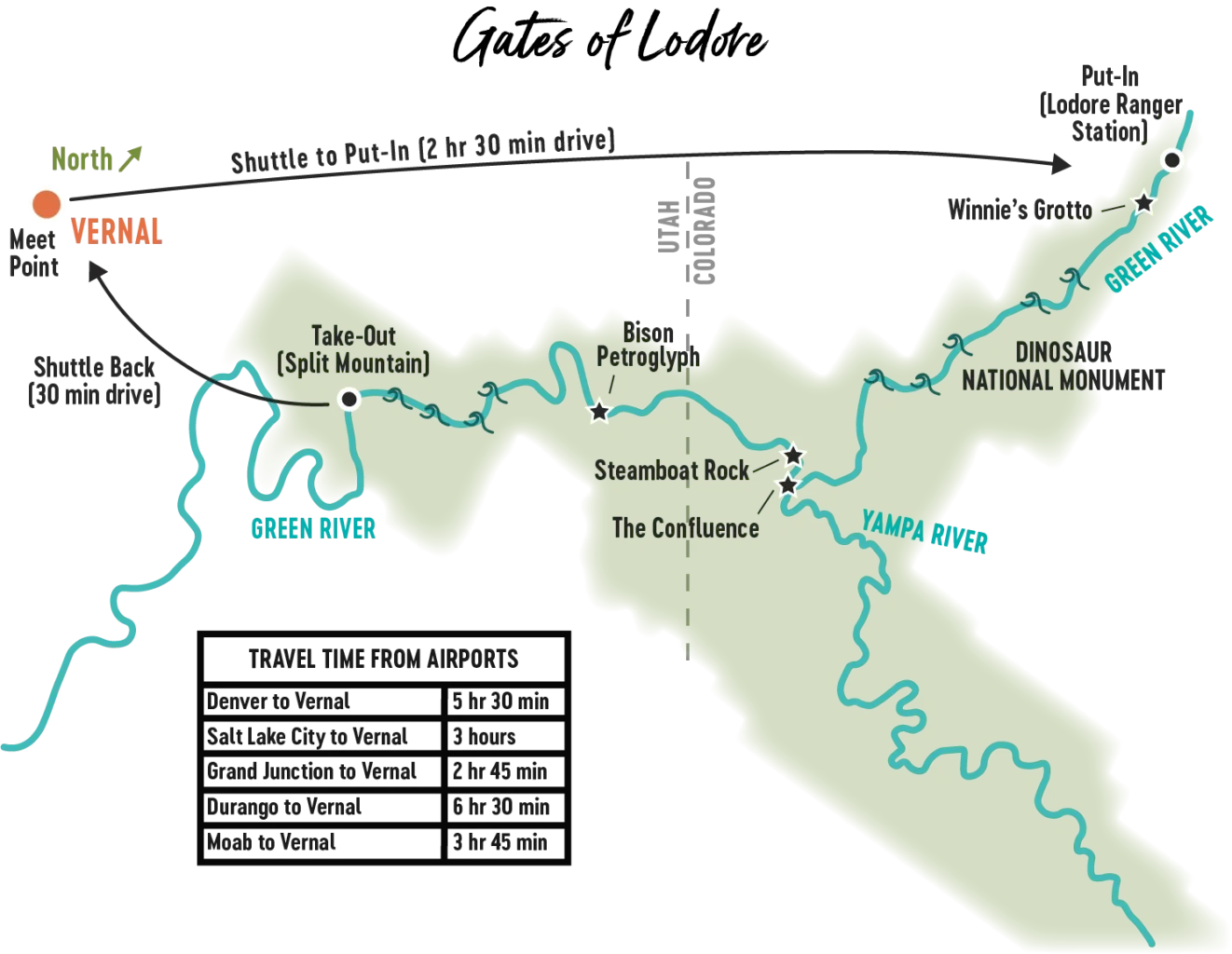
A magnificent towering canyon marks the start of the trip at the “Gates of Lodore” and follows one of the most beautiful stretches of river anywhere. Camp on big sandy beaches, revel at red quartzite cliffs, and enjoy the thrills of 30+ class II & III rapids on a 3 or 4 day adventure.
About Green River Rafting
Where is the Green River?
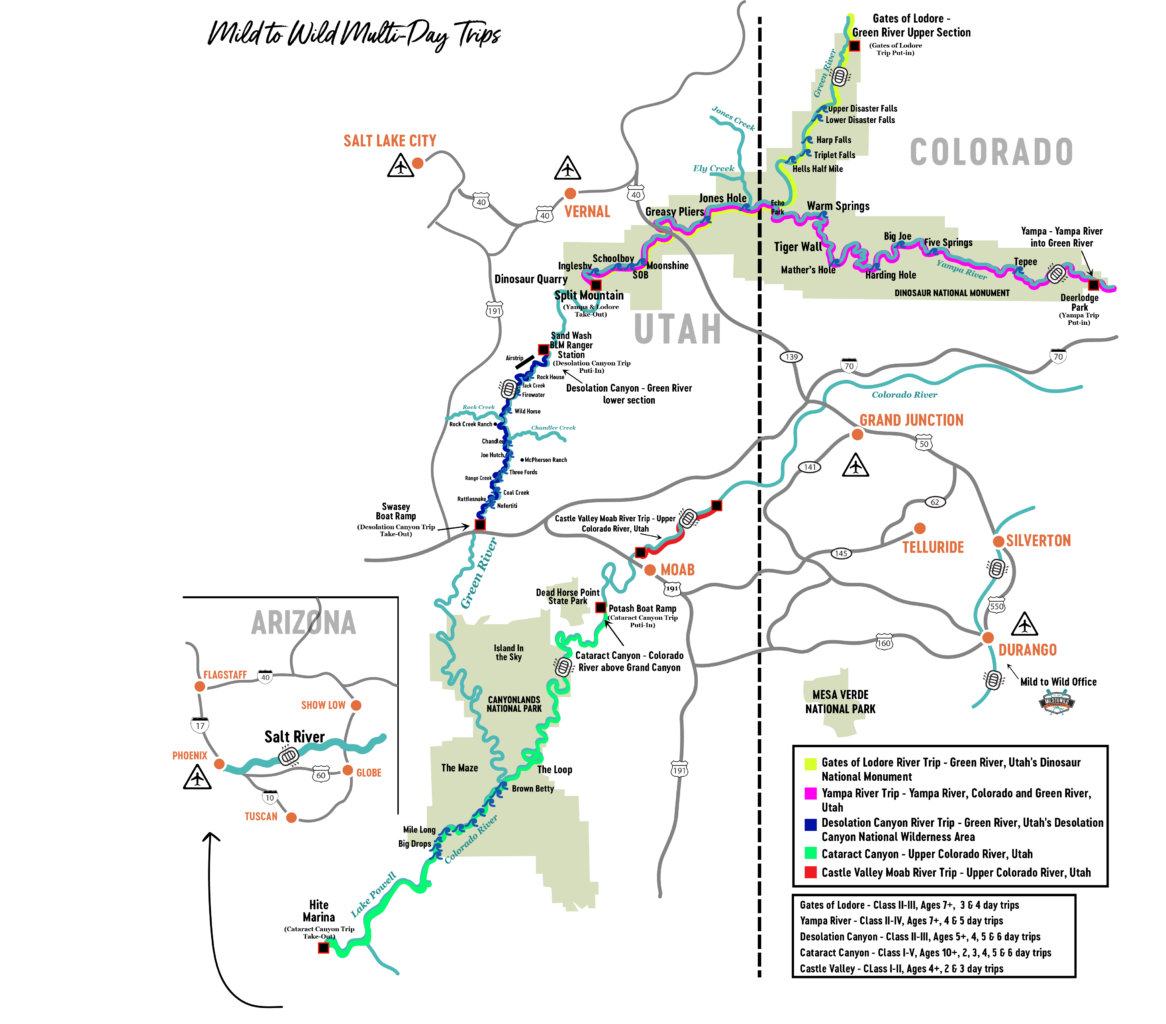
The Green River begins in western Wyoming, trickling down from the Wind River Mountains, a wondrously jagged range of the Rockies. After Flaming Gorge Reservoir, it flows into Utah and quickly turns east into Colorado, before meandering west again into Utah.
The Green River ends in Canyonlands National Park at its confluence with the Colorado River. From the headwaters in Wyoming to the confluence in Utah, the Green River is 730 miles long.
What are the Green River’s Rafting Sections?
The Green River has many rafting sections! The most popular stretches include:
- Red Canyon (Northern Utah)
- Gates of Lodore (Colorado and Utah)
- Desolation Canyon (Utah)
- Labyrinth Canyon & Stillwater Canyon (Utah)
How long does it take to raft the Green River?
To raft the Green River from start to finish would take weeks. Luckily there are great sections to raft if you don’t have all the time in the world.
- Gates of Lodore commercial rafting trips last 3-5 days.
- Desolation Canyon commercial rafting trips last 4-6 days.
- Labyrinth Canyon commercial trips last 4-5 days.
What is the Average CFS on the Green River?
The Green River’s CFS changes dramatically as tributaries add and diversion dams take, keeping the flows ever-changing from canyon to canyon. Here are the typically low and high ranges during rafting season (spring to fall):
- Release from Flaming Gorge Reservoir: Average is around 2,000 CFS
- Dinosaur National Monument: Average range is between 7,000 and 25,000 CFS.
- Desolation Canyon: Average range is between 5,000 and 20,000 CFS
- Labyrinth Canyon: Average range is between 5,000 and 30,000 CFS
What are the Class of Rapids on the Green River?
Since the Green River is 730 miles long, it’s better to break up its rapids by canyons. Throughout the Green River’s journey to the Colorado River, there are many calm flat water sections, with mostly class II rapids when they do occur.
The largest rapids on the Green River are in Lodore Canyon with class III and IV rapids.
The canyon with the most rapids on the Green River is in Desolation Canyon, with over 60 class II rapids, and a few class III.
What sections of the Green River require a Permit to Raft?
- Gates of Lodore
- Desolation Canyon
- Labyrinth Canyon
- Stillwater Canyon
What sections of the Green River don’t require a Permit to Raft?
- 30 miles below Flaming Gorge Reservoir (Wyoming to Colorado state line)
- Browns Canyon before Dinosaur National Monument (Colorado)
- Uintah Basin after Dinosaur National Monument (Utah)
- Jensen to Ouray before Desolation Canyon (Utah)
Photos
Reviews from our Guests
Posted on Google
 Bryan Gonzales31 days ago
Trustindex verifies that the original source of the review is Google.
An amazing 4-day trip with excellent, professional, and fun guides down the Green River through the Gates of Lodore. We had a great experience with awesome camping spots secured for us and food prepared for each meal. Highly recommend Mild to Wild, and a special shout out to Josie, Lauren, Lennie, Ben, Pascal and Wolf for being the most fun guides I've ever had on a river trip!Posted on Google Michael Ricci62 days agoWe rafted Gates of Ladore (Green River) with Mild to Wild and loved every minute! The Green River and Dinosauer Natl Monument are absolutely breathtaking and this comes from someone that has rafted the Grand Canyon, Browns Canyon , the Colorado and a host of other spectacular river systems. What made our trip truly special were the guiding team. Ryan was our lead guide and did a superb job. Hayden was also exceptional and makes Mild to Wild truly exceptional. Alana was so good with our two Grandsons and such a great asst guide too. And finally Wolf was exceptional too. Hope you guys know what gems all these folks are and they all make Mild to Wild someone we would gladly book again with!Posted on Google
 Linda Relson82 days agoWe spent 4 days on the water with Jordan and her team of guides. They were the best guides we could have asked for. Our friends had a wedding ceremony at the first campsite, and M2W helped make it so special. The trip was a wonderful escape from the everyday - no cell service on the Green River / DInosaur National Monument. Can't wait to do it again in future years. Hi Kelly!Posted on Google
 Cherlene Robson99 days agoWe did water rafting at Lodor Green River rafting trip with mild2wild. It was truly an unforgettable adventure. Surrounded by the towering canyons in between with the winding river flowing through them, it felt like stepping into another world. A reminder of the greatness and beauty of God’s creation. Ryan and his team did such a fantastic work, very well organized and food was great even catered for my gluten free diet. Met with lovely people and we had an amazing experience. Fully recommended it if you are up for an afternoon.Posted on Google
 Greg Robson100 days agoGates of Lodor on Green, led by Ryan and the crew (Pascal, Ben, Caleb, Ziggy, and??). First time rafting and ‘duckying’ for us, and it is definitely something we would like to do again! The crew is skilled, chilled and funny. We got to know a few people on the trip and exchanged contacts with a few of them. I now think that two nights camping was not enough for us as novices, to really get good at it. I think we would need at least 3 nights to be efficient with setup and takedown. The Green River water has nice stiff flows on days 1 and 2, thanks to releases from the dam upstream. Day 3 had more normal water levels. Would go again! Shout out to Ryan. May he host the best trips and groups.Posted on Google
 William Phelps408 days agoStoke: high Fun: high Food: delicious Relaxation: maximized My family and I went on a stellar 4-day rafting trip on the Green River starting at the Gates of Lodore. As a former river guide, I was blown away by how competent and engaging our guides were. Trip Lead Marcus and his teammate Conrad, as well as our first point of contact, Olive, all helped us have a fantastic trip. A highlight was getting my aunt out in a whitewater multi-day rafting trip for her very first rafting experience, and she had a blast thanks to the Mild to Wild team! I'd do it again in a heartbeat if I had time 🙂Posted on Google
 Mark M411 days agoUnforgettable Experience on the Gates of Lodore with Mild to Wild! We just returned from an incredible trip through the Gates of Lodore with Mild to Wild, and it exceeded every expectation. The scenery was absolutely stunning, but what truly made this trip unforgettable was the exceptional crew of guides. Jordan, Josie, Devon, Brandon, Myles, and Jackson were phenomenal from start to finish. Their energy, professionalism, and sheer hard work were evident every single day. From rowing us through beautiful stretches of the Green River to setting up camp, cooking, cleaning, and sharing knowledge about the area, they never stopped giving it their all — and always with a smile. The food? AMAZING. Every meal felt like something out of a gourmet camping cookbook — hot breakfasts, fresh lunches, and delicious dinners under the stars. They even accommodated dietary needs seamlessly, which was so appreciated. The trip was the perfect blend of adventure, relaxation, and awe-inspiring nature, and the guides made us feel safe, cared for, and part of something special. Huge thanks to the entire Mild to Wild team — especially Jordan, Josie, Devon, Brandon, Myles, and Jackson — for a truly unforgettable experience. Highly, highly recommend this trip. We’re already dreaming about the next one!Posted on Google
 Rett Hood412 days agoJust got off the Green River Gates of Lodore trip and it was epic! The beauty of the surrounding scenery and the fun whitewater was awesome but we were even more impressed by the professionalism and extremely hard work ethic that all of our guides displayed throughout the trip! The trip was led by Kelly’s daughter, Jordan, who’s laid back leadership style kept the expedition running smoothly without stress or drama. Brandon made our trip memorable by explaining every detail of how the surrounding natural world came to be and leading us through a canyon on a short hike to waterfalls and pictograph wall. He also did a great job leading the 6 raft inflatable kayak brigade AKA “duckies.” The other outstanding guides Miles, Devon, Jackson, and Josie worked their tails off turning our 22 person Father/Son camping trip into a Glamping trip by turning into gourmet chefs for each outstanding meal! Can’t wait to come back and do it again!Posted on Google
 Kelly Taylor418 days agoWe ran the Gates of Lodore section of the Green River with Mild to Wild, 4 days and 3 nights. The guides were so awesome with the kids, the food was great, and the whole experience was really professional. Highly recommend.Posted on Google
 Megan Burkhammer420 days agoWe had our best family vacation ever in Lodore Canyon on the Green River with Mild to Wild. Thanks for a great trip, Jackson, Caleb, Ziggy, Miles, Scotty, and Emma! The scenery was breathtaking, the rafting was epic, and the guides felt like old friends by the end of the trip. We enjoyed the other guests on our trip so much too. Games after dinner were a blast! The food was delicious and fresh. I can't recommend this trip highly enough!
What are you waiting for? Call today (800) 567-6745 OR (970) 247-4789
History
Gates of Lodore Quick Facts

Desolation Canyon Quick Facts
Maps
Gates of Lodore
Desolation Canyon

Map of Green River in Colorado Plateau River System
Green River White Water Rafting FAQs
When is the best time to raft the Green River?
The best time depends on which canyon you choose! For the Gates of Lodore, June is the peak for high-water thrills due to scheduled dam releases. If you’re heading to Desolation Canyon, June through August is spectacular; June offers the most exciting rapids, while July and August provide warmer swimming temperatures and the best beach camping for families.
When can I raft the Green River?
Our Green River season typically runs from May through September. Because sections like the Gates of Lodore and Desolation Canyon are managed by a strict federal permit system, these 3 to 6-day expeditions often book up months in advance. We recommend booking early to secure your spot in these remote wilderness areas.
What is the minimum age to raft the Green River?
Minimum ages are based on the specific canyon and current water levels:
- Desolation Canyon (Class II-III): Depending on water levels the minimum age to raft is 5 to 7 years old (minimum 35-50 lbs).
- Gates of Lodore (Class III-IV): 7 years old during standard flows, but may increase to 12+ during the high-water flows in June.
What should I wear and bring on a Green River multi-day trip?
For these immersive wilderness journeys, you need gear for both the river and the canyon campsites. We provide all rafting equipment, group camping equipment, and deliscious meals. You are responsible for personal items:
- On the River: Quick-drying synthetic layers (avoid cotton!), secure river sandals with a heel strap, and a wide-brimmed sun hat.
- At Camp: Comfortable shoes for hiking to ancient petroglyphs, a headlamp, and layers for cool desert nights. You can bring your own camping gear including a tent, sleeping bag, and sleeping pad or rent them from us.
For a comprehensive packing list visit our multi day rafting trip planning page.
Is white water rafting on the Green River safe?
White water rafting is an inherently dangerous activity with risks that cannot be entirely eliminated. As a result, we require all guests to sign a liability waiver and assumption of risk before departing. However, your experience is our number one priority. To minimize risk in this rugged environment, our guide training exceeds state requirements and trip leaders average over 2,000 river miles of experience. Our guides are certified in CPR and First Aid, with many holding advanced Wilderness First Responder (WFR) or Wilderness Advanced First Aid (WAFA) certifications. We utilize quality and well maintained equipment, including custom designed rafts, U.S. Coast Guard approved Type V personal flotation devices, and helmets. Expeditions are equipped with satellite communication, comprehensive first aid kits, and an AED to ensure we are prepared for the remote nature of the Green River.